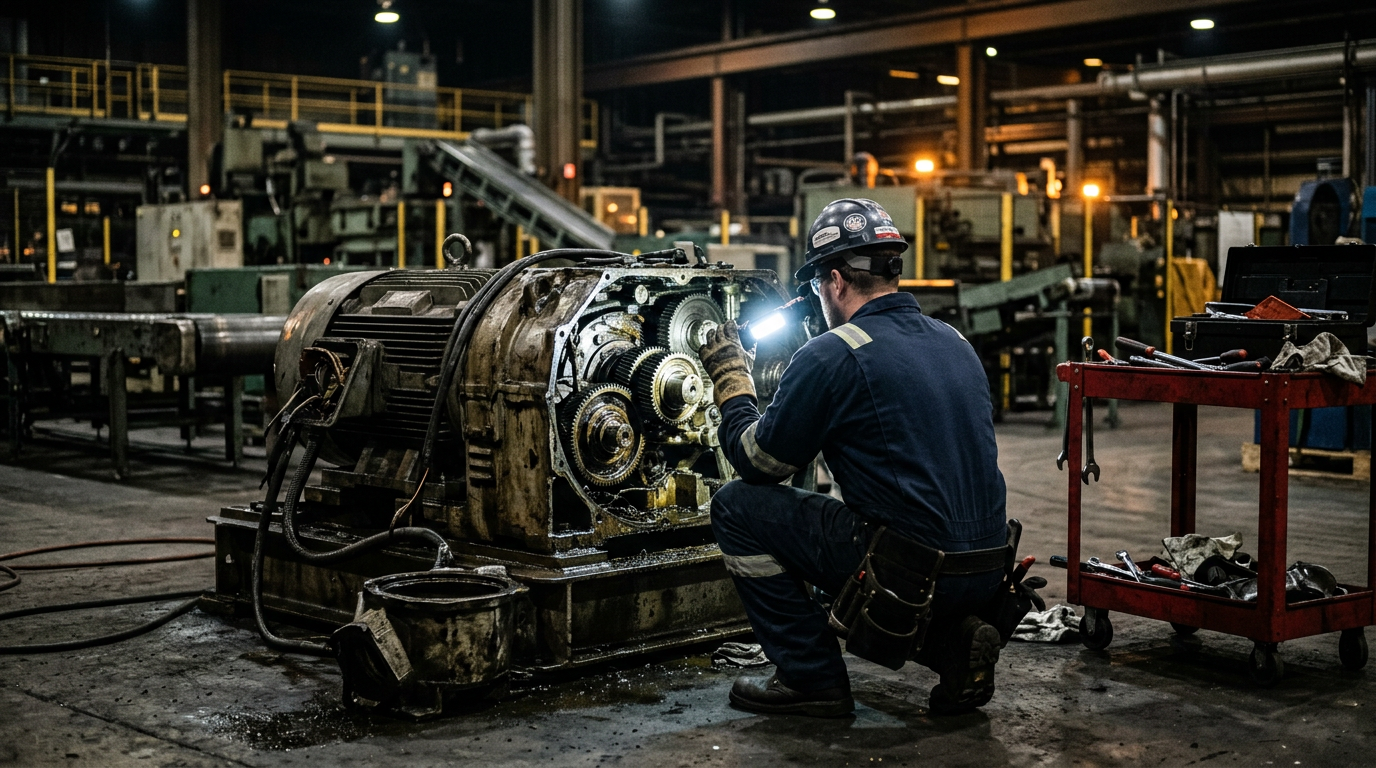
The call comes mid-shift: the critical machine is down, again. No warning. Maintenance scrambles, production reshuffles, someone starts calling for parts, and a customer order slides. By the time it is running, the day is gone — and everyone knows it will happen again.
Predictive maintenance sounds like exactly the answer. For some plants it is. For many, it is a step or two ahead of where they are today.
Maintenance is almost entirely reactive. The team is skilled and hardworking, but they spend their days fixing what broke rather than preventing what will. Preventive schedules exist on paper but slip whenever production is busy. Failure history lives in people's memories or free-text work orders. And the most experienced technicians, the ones who can hear a bearing going bad, are closer to retirement than anyone wants to admit.
Firefighting crowds out prevention. When every day brings an emergency, planned work is the first thing dropped. That guarantees more emergencies.
Failure history is not usable. Work orders say "fixed it" or "replaced part." Without consistent causes and asset records, there is no pattern to learn from — for people or for software.
Knowledge lives in people, not systems. Experienced technicians know which machines are temperamental and why. When they leave, that knowledge leaves with them.
Production and maintenance are at odds. Production needs uptime today. Maintenance needs time to prevent tomorrow's failure. Without shared priorities, today wins every time.
Technology is expected to leapfrog the basics. Sensors and predictive analytics are powerful, but they need a baseline of asset data, failure history and a team able to act on alerts.
Unplanned downtime is expensive in ways that rarely show up on one report: lost output, overtime to recover, expedited parts, scrap from unstable restarts, missed deliveries and stressed teams. Reactive repairs usually cost more than planned ones. And the longer knowledge stays in individuals' heads, the bigger the risk when they retire.
"Sensors will tell us when machines will fail." Sensors show condition. Turning condition into reliable prediction requires context, history and people who respond.
"We need predictive maintenance on everything." Most value typically comes from a small number of critical assets. Monitoring everything creates noise.
"Our team just needs to work harder." Reactive plants usually have teams working extremely hard. The problem is the system they are working within.
Plants with reliable equipment tend to have a clear view of their critical assets, maintenance history that records causes rather than just fixes, preventive work that is protected rather than deferred, and a production-maintenance partnership built on shared priorities. Predictive technology then adds real value on top of that foundation.
Our IoT deployment service focuses on the critical assets where monitoring pays back. Keeping maintenance and calibration records controlled and audit-ready is part of a quality system, which our sister brand ExceleorQMS covers. Related: IoT sensor first projects and why OEE can look good while output is missed.
If your machines keep surprising you, read the machines fail without warning situation, then tell us what's going on. We will reply from [email protected].
Predictive maintenance sounds like exactly the answer. For some plants it is. For many, it is a step or two ahead of where they are today.
What This Situation Actually Looks Like
Maintenance is almost entirely reactive. The team is skilled and hardworking, but they spend their days fixing what broke rather than preventing what will. Preventive schedules exist on paper but slip whenever production is busy. Failure history lives in people's memories or free-text work orders. And the most experienced technicians, the ones who can hear a bearing going bad, are closer to retirement than anyone wants to admit.
Why It Happens
Firefighting crowds out prevention. When every day brings an emergency, planned work is the first thing dropped. That guarantees more emergencies.
Failure history is not usable. Work orders say "fixed it" or "replaced part." Without consistent causes and asset records, there is no pattern to learn from — for people or for software.
Knowledge lives in people, not systems. Experienced technicians know which machines are temperamental and why. When they leave, that knowledge leaves with them.
Production and maintenance are at odds. Production needs uptime today. Maintenance needs time to prevent tomorrow's failure. Without shared priorities, today wins every time.
Technology is expected to leapfrog the basics. Sensors and predictive analytics are powerful, but they need a baseline of asset data, failure history and a team able to act on alerts.
Warning Signs
- Most maintenance work is unplanned.
- Preventive tasks are routinely deferred.
- Work orders lack consistent failure causes.
- Nobody can say which assets cause the most downtime, with data.
- Critical spare parts are frequently unavailable.
- Key technicians are the only ones who understand certain machines.
What It's Costing You
Unplanned downtime is expensive in ways that rarely show up on one report: lost output, overtime to recover, expedited parts, scrap from unstable restarts, missed deliveries and stressed teams. Reactive repairs usually cost more than planned ones. And the longer knowledge stays in individuals' heads, the bigger the risk when they retire.
Common Misconceptions
"Sensors will tell us when machines will fail." Sensors show condition. Turning condition into reliable prediction requires context, history and people who respond.
"We need predictive maintenance on everything." Most value typically comes from a small number of critical assets. Monitoring everything creates noise.
"Our team just needs to work harder." Reactive plants usually have teams working extremely hard. The problem is the system they are working within.
Questions Leaders Should Be Asking
- Which assets actually cause most of our downtime, and how do we know?
- How much of our maintenance work is planned versus reactive?
- Is our failure history good enough to learn from?
- What happens to our critical knowledge when key technicians leave?
- If a sensor raised an alert tomorrow, who would act, and how?
What Good Looks Like
Plants with reliable equipment tend to have a clear view of their critical assets, maintenance history that records causes rather than just fixes, preventive work that is protected rather than deferred, and a production-maintenance partnership built on shared priorities. Predictive technology then adds real value on top of that foundation.
Our IoT deployment service focuses on the critical assets where monitoring pays back. Keeping maintenance and calibration records controlled and audit-ready is part of a quality system, which our sister brand ExceleorQMS covers. Related: IoT sensor first projects and why OEE can look good while output is missed.
Frequently Asked Questions
Why do our machines keep failing without warning?
Usually because maintenance is mostly reactive, preventive work gets deferred, failure history is not recorded consistently and critical knowledge lives with a few individuals.
Are we ready for predictive maintenance?
Readiness depends on knowing your critical assets, having usable failure history, and having a team with the capacity to act on alerts. Without those, predictive tools struggle to deliver.
Should we put sensors on every machine?
Rarely. Most value usually comes from a small number of critical assets. Monitoring everything tends to create noise rather than insight.
What does unplanned downtime really cost?
Beyond repair costs: lost output, overtime, expedited parts, scrap on restart, late deliveries and team burnout — costs spread across many reports.
Tell Us What's Going On
If your machines keep surprising you, read the machines fail without warning situation, then tell us what's going on. We will reply from [email protected].