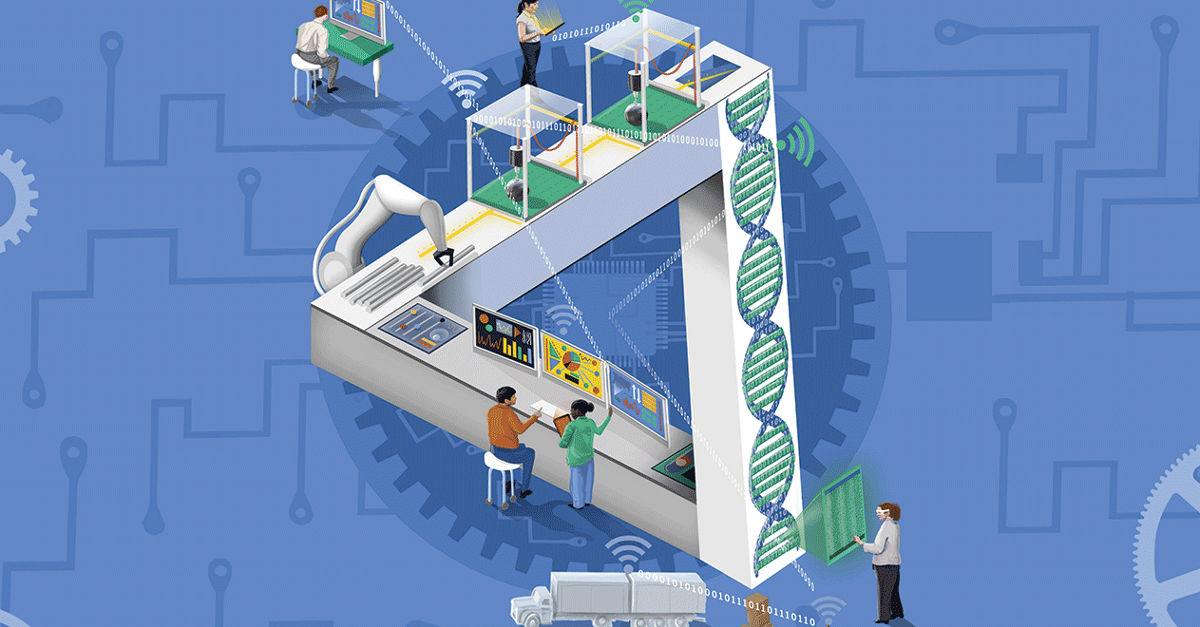
Every manufacturer knows they need to modernize. Industry conferences, trade publications, and technology vendors all paint compelling visions of the smart factory — fully connected, data-driven, and autonomously optimized. But for mid-market manufacturers with real constraints on budget, IT resources, and operational bandwidth, the gap between vision and execution can feel insurmountable.
The truth is that smart factory transformation does not require a massive capital investment or a multi-year technology overhaul. With a practical, phased approach, mid-market manufacturers can achieve significant Industry 4.0 capabilities within 12 months — delivering measurable ROI at each phase while building a foundation for continuous improvement.
At OPZ360, we have guided dozens of manufacturers through this exact journey. This 12-month roadmap reflects the proven frameworks and lessons learned from those engagements.
The first quarter is about understanding your current state, setting realistic targets, and building the infrastructure foundation for everything that follows.
Before investing in technology, you need an honest evaluation of where you stand. A comprehensive digital maturity assessment examines five key dimensions:
OPZ360's free Digital Transformation Readiness Assessment provides a quick initial score across these dimensions. For a deeper evaluation, our consulting team conducts comprehensive on-site assessments that include plant floor observations, system audits, and stakeholder interviews.
Budget Guidance: Assessment and planning typically runs $15,000-$40,000 depending on the number of facilities and complexity of operations.
With assessment data in hand, develop a prioritized transformation roadmap. Key activities include:
Critical success factor: Resist the temptation to boil the ocean. The most successful smart factory programs start with 2-3 focused pilots that demonstrate tangible value, building organizational confidence and momentum for broader rollout.
With the roadmap approved, begin building the technology foundation:
Budget Guidance: Infrastructure foundation typically requires $50,000-$150,000 depending on current network state and chosen platforms.
The second quarter is where theory meets reality. Deploy your first pilot projects, prove value with real data, and build the organizational muscle for scaling.
The most common and highest-impact first pilot is real-time OEE (Overall Equipment Effectiveness) monitoring. Deploy IoT sensors on 3-5 critical machines to capture:
Display real-time OEE dashboards on the plant floor where operators, supervisors, and managers can see them. The visibility alone typically drives 5-10% OEE improvement within the first month as teams become aware of previously hidden losses.
With sensor infrastructure in place, deploy condition-based monitoring on your most critical and failure-prone equipment. Install vibration, temperature, and current sensors. Begin collecting baseline data and establish alert thresholds.
For a deeper dive into predictive maintenance strategy, see our companion article: Predictive Maintenance in Industry 4.0.
After 2-3 months of pilot operation, compile results:
Budget Guidance: Pilot deployment typically costs $75,000-$200,000 including sensors, software licenses, integration, and training.
Expected Results: 5-15% OEE improvement on monitored assets, 2-4 predicted maintenance events that prevented unplanned downtime.
With proven pilots and executive buy-in, the third quarter focuses on expanding successful use cases and connecting previously siloed systems.
Expand real-time monitoring from the pilot group to all critical production assets. Standardize sensor deployment, dashboard configurations, and alert procedures across all production lines. Integrate OEE data with your ERP system to correlate production performance with business metrics like cost per unit, on-time delivery, and customer satisfaction.
Begin connecting your core systems to create the digital thread:
With connected data streams, deploy advanced analytics:
Budget Guidance: Scaling and integration typically runs $150,000-$400,000 depending on the number of assets, systems, and complexity.
The final quarter focuses on optimization, continuous improvement, and building the organizational capabilities to sustain and extend your smart factory program.
Refine and optimize the systems deployed in previous phases:
Technology is only as effective as the people using it. Invest in comprehensive training:
Establish the governance and processes for ongoing improvement:
Budget Guidance: Optimization and sustainment: $50,000-$100,000 including training, governance setup, and Year 2 planning.
For a mid-market manufacturer ($50M-$500M revenue), a comprehensive 12-month smart factory program typically requires:
Smart factory transformation touches every part of your organization. Within the Exceleor family of brands, our sister companies bring specialized expertise to complement OPZ360's technology implementation:
The 12-month timeline outlined here is not theoretical — it is a proven, practical framework that OPZ360 has helped manufacturers implement across aerospace, automotive, medical devices, and general manufacturing.
The key is to start. Every month you delay is a month of unrealized efficiency gains, quality improvements, and competitive advantage.
Ready to build your smart factory roadmap? Take our free Digital Transformation Readiness Assessment to understand your current state, or contact us directly to schedule a consultation with our Industry 4.0 team.
The truth is that smart factory transformation does not require a massive capital investment or a multi-year technology overhaul. With a practical, phased approach, mid-market manufacturers can achieve significant Industry 4.0 capabilities within 12 months — delivering measurable ROI at each phase while building a foundation for continuous improvement.
At OPZ360, we have guided dozens of manufacturers through this exact journey. This 12-month roadmap reflects the proven frameworks and lessons learned from those engagements.
Phase 1: Assessment and Foundation (Months 1-3)
The first quarter is about understanding your current state, setting realistic targets, and building the infrastructure foundation for everything that follows.
Month 1 — Digital Maturity Assessment
Before investing in technology, you need an honest evaluation of where you stand. A comprehensive digital maturity assessment examines five key dimensions:
- Technology Infrastructure: What systems do you have (ERP, MES, QMS, SCADA)? How old are they? How well are they integrated?
- Data Readiness: Is your data structured, accessible, and reliable? Where are the critical data gaps?
- Process Maturity: Are your core processes standardized and documented, or do they vary by shift, line, or operator?
- Workforce Capability: Does your team have the digital skills needed? What training gaps exist?
- Leadership Alignment: Is there executive sponsorship and a clear vision for digital transformation?
OPZ360's free Digital Transformation Readiness Assessment provides a quick initial score across these dimensions. For a deeper evaluation, our consulting team conducts comprehensive on-site assessments that include plant floor observations, system audits, and stakeholder interviews.
Budget Guidance: Assessment and planning typically runs $15,000-$40,000 depending on the number of facilities and complexity of operations.
Month 2 — Strategic Roadmap Development
With assessment data in hand, develop a prioritized transformation roadmap. Key activities include:
- Identifying 3-5 high-impact use cases with clear, measurable ROI targets
- Defining the minimum viable technology architecture needed to support initial use cases
- Establishing a governance structure with an executive sponsor, project lead, and cross-functional steering committee
- Creating a detailed Phase 2 project plan with timelines, resources, and milestones
Critical success factor: Resist the temptation to boil the ocean. The most successful smart factory programs start with 2-3 focused pilots that demonstrate tangible value, building organizational confidence and momentum for broader rollout.
Month 3 — Infrastructure Foundation
With the roadmap approved, begin building the technology foundation:
- Network Upgrade: Ensure your plant floor network can support IoT devices and real-time data flows. This may involve upgrading Wi-Fi, installing industrial Ethernet, or deploying edge computing gateways.
- Data Platform: Establish a centralized data platform (cloud-based or hybrid) that can ingest, store, and process manufacturing data from multiple sources.
- Cybersecurity: Implement OT (Operational Technology) cybersecurity measures including network segmentation, access controls, and monitoring. This is non-negotiable — connecting factory systems to networks without proper security creates unacceptable risk.
Budget Guidance: Infrastructure foundation typically requires $50,000-$150,000 depending on current network state and chosen platforms.
Phase 2: Pilot and Prove (Months 4-6)
The second quarter is where theory meets reality. Deploy your first pilot projects, prove value with real data, and build the organizational muscle for scaling.
Month 4 — Pilot Deployment: OEE Visibility
The most common and highest-impact first pilot is real-time OEE (Overall Equipment Effectiveness) monitoring. Deploy IoT sensors on 3-5 critical machines to capture:
- Availability (uptime vs. downtime with reason codes)
- Performance (actual vs. theoretical cycle times)
- Quality (good parts vs. defective parts)
Display real-time OEE dashboards on the plant floor where operators, supervisors, and managers can see them. The visibility alone typically drives 5-10% OEE improvement within the first month as teams become aware of previously hidden losses.
Month 5 — Pilot Deployment: Predictive Maintenance
With sensor infrastructure in place, deploy condition-based monitoring on your most critical and failure-prone equipment. Install vibration, temperature, and current sensors. Begin collecting baseline data and establish alert thresholds.
For a deeper dive into predictive maintenance strategy, see our companion article: Predictive Maintenance in Industry 4.0.
Month 6 — Pilot Results and Business Case
After 2-3 months of pilot operation, compile results:
- Quantify OEE improvements and calculate financial impact
- Document downtime events predicted and prevented
- Calculate actual ROI against projections
- Identify lessons learned and process improvements for scaling
- Present results to executive leadership with a recommendation for Phase 3 scaling
Budget Guidance: Pilot deployment typically costs $75,000-$200,000 including sensors, software licenses, integration, and training.
Expected Results: 5-15% OEE improvement on monitored assets, 2-4 predicted maintenance events that prevented unplanned downtime.
Phase 3: Scale and Integrate (Months 7-9)
With proven pilots and executive buy-in, the third quarter focuses on expanding successful use cases and connecting previously siloed systems.
Month 7 — Scale OEE and Monitoring
Expand real-time monitoring from the pilot group to all critical production assets. Standardize sensor deployment, dashboard configurations, and alert procedures across all production lines. Integrate OEE data with your ERP system to correlate production performance with business metrics like cost per unit, on-time delivery, and customer satisfaction.
Month 8 — System Integration
Begin connecting your core systems to create the digital thread:
- ERP-to-MES integration for automated work order creation and real-time production reporting
- Quality system integration for automated inspection data capture and SPC (Statistical Process Control)
- Engineering change management integration to ensure production always works from current specifications
Month 9 — Advanced Analytics
With connected data streams, deploy advanced analytics:
- Production scheduling optimization using AI-driven algorithms
- Quality prediction models that identify defect-prone conditions before they produce scrap
- Energy consumption optimization using real-time monitoring and automated controls
Budget Guidance: Scaling and integration typically runs $150,000-$400,000 depending on the number of assets, systems, and complexity.
Phase 4: Optimize and Sustain (Months 10-12)
The final quarter focuses on optimization, continuous improvement, and building the organizational capabilities to sustain and extend your smart factory program.
Month 10 — Optimization and Fine-Tuning
Refine and optimize the systems deployed in previous phases:
- Tune predictive maintenance models using accumulated operational data
- Optimize dashboards and alert thresholds based on operator feedback
- Implement closed-loop quality improvements where production parameters are automatically adjusted based on quality trends
Month 11 — Workforce Development
Technology is only as effective as the people using it. Invest in comprehensive training:
- Operator training on new systems, dashboards, and data-driven decision-making
- Maintenance team training on predictive maintenance tools and condition-based workflows
- Leadership training on using analytics for strategic decision-making
- Identify and develop internal "digital champions" who will sustain momentum after external consultants depart
Month 12 — Continuous Improvement Framework
Establish the governance and processes for ongoing improvement:
- Monthly smart factory review meetings with KPI tracking
- Annual roadmap refresh that incorporates new technologies and evolving business needs
- Innovation pipeline process for evaluating and piloting emerging technologies
- Year 2 planning: identify next-level use cases (digital twins, autonomous quality, supply chain integration)
Budget Guidance: Optimization and sustainment: $50,000-$100,000 including training, governance setup, and Year 2 planning.
Total Investment and Expected ROI
For a mid-market manufacturer ($50M-$500M revenue), a comprehensive 12-month smart factory program typically requires:
- Total Investment: $350,000-$900,000 across all four phases
- Expected Annual Benefits: $500,000-$3M in reduced downtime, improved OEE, lower scrap rates, and operational efficiencies
- ROI Payback: 6-18 months depending on starting maturity and scale of deployment
Ecosystem Partners for Your Journey
Smart factory transformation touches every part of your organization. Within the Exceleor family of brands, our sister companies bring specialized expertise to complement OPZ360's technology implementation:
- AppliedGuidance provides executive coaching and leadership development to help your management team navigate the cultural and organizational changes that come with digital transformation.
- Exceleor delivers strategic oversight and governance expertise, ensuring your smart factory program aligns with broader business strategy and investment priorities.
- SupplySourceSync extends your smart factory capabilities into the supply chain, digitizing supplier management, procurement, and logistics for end-to-end visibility.
Start Your Smart Factory Journey Today
The 12-month timeline outlined here is not theoretical — it is a proven, practical framework that OPZ360 has helped manufacturers implement across aerospace, automotive, medical devices, and general manufacturing.
The key is to start. Every month you delay is a month of unrealized efficiency gains, quality improvements, and competitive advantage.
Ready to build your smart factory roadmap? Take our free Digital Transformation Readiness Assessment to understand your current state, or contact us directly to schedule a consultation with our Industry 4.0 team.