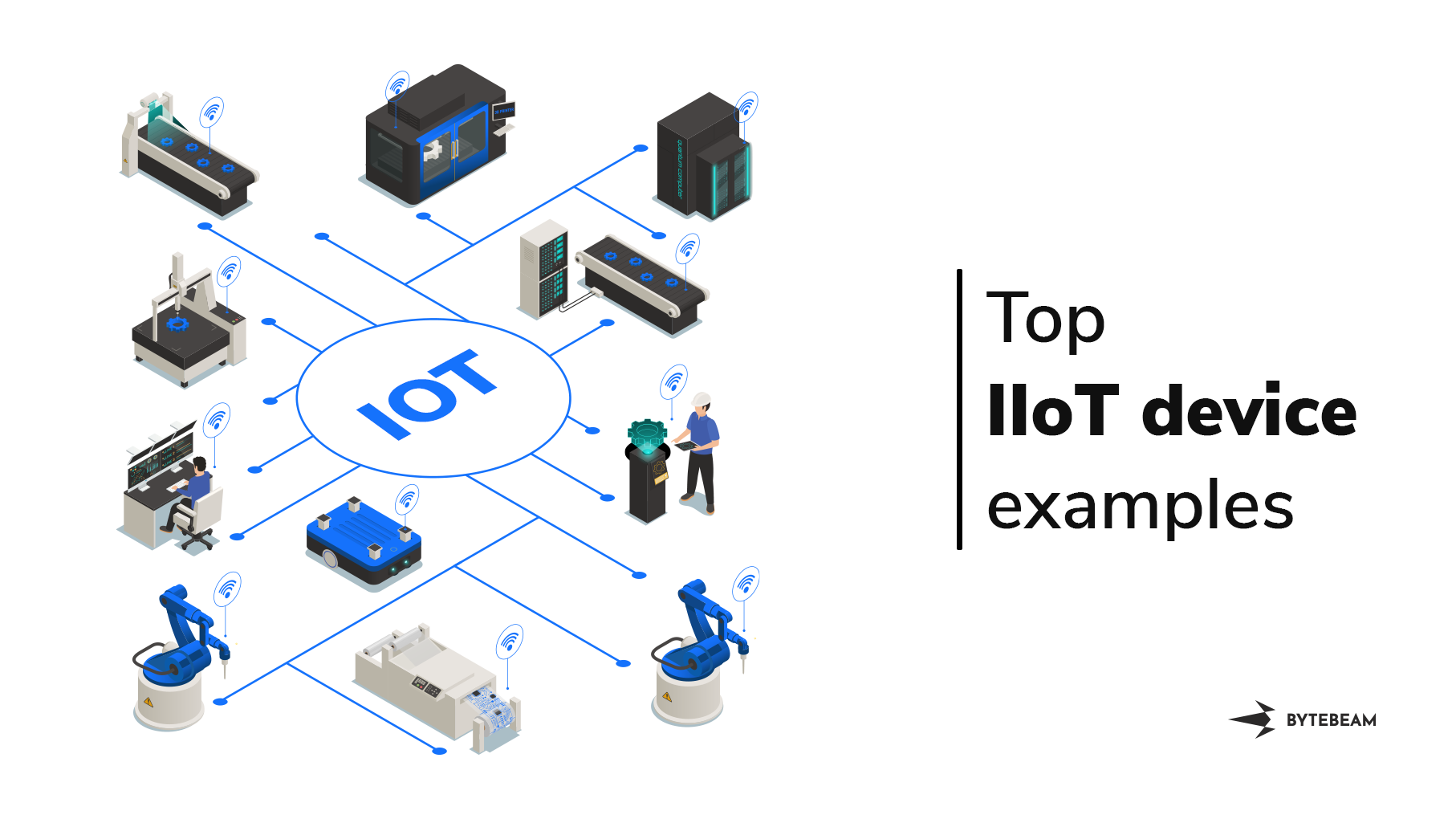
IoT in Manufacturing: Beyond the Buzzwords
The Industrial Internet of Things has been a buzzword for a decade. But behind the marketing noise, real manufacturers are deploying real sensors that generate real data that drives real results. The difference between IoT success and failure is not the technology — it is choosing the right application for your specific operation and implementing it with manufacturing discipline.
At OPZ360, we have deployed IoT solutions across 150+ manufacturing operations. Here are the 10 applications that consistently deliver the highest ROI, ranked by typical implementation difficulty and payback period.
1. Vibration Monitoring for Predictive Maintenance
Difficulty: Low | Typical Payback: 3-6 months
The single highest-ROI IoT application in manufacturing. Wireless vibration sensors mounted on rotating equipment — motors, pumps, compressors, spindles — detect bearing wear, misalignment, imbalance, and looseness weeks before failure. Machine learning algorithms trained on your specific equipment learn normal vibration signatures and alert when patterns change.
Results from our deployments: 30-45% reduction in unplanned downtime, 20-30% extension of bearing life, 15-25% reduction in maintenance labor costs. One automotive manufacturer saved $1.8M in the first year across 200 monitored assets on a $180K deployment.
2. Real-Time OEE Tracking
Difficulty: Low-Medium | Typical Payback: 4-8 months
Most manufacturers calculate OEE manually — if they calculate it at all. IoT-connected machines report cycle times, downtime events, and reject counts in real-time. Operators see their current OEE on displays at their stations. Supervisors see line-level and shift-level trends. Executives see plant-level dashboards.
The visibility alone drives improvement. When operators can see that their OEE dropped 8 points during a specific run, they start asking why. When supervisors can compare shifts, best practices propagate. Typical improvement: 5-15 OEE points within 6 months of deployment.
3. Energy Consumption Monitoring
Difficulty: Low | Typical Payback: 6-12 months
Sub-metering individual machines and systems reveals energy waste that is invisible in monthly utility bills. Common discoveries include: machines left running during breaks and off-shifts consuming 15-30% of their total energy, compressed air leaks wasting 20-40% of compressor capacity, HVAC systems overcooling production areas by 5-10 degrees.
A plastics manufacturer we worked with discovered that their granulators were consuming 40% more energy than specification due to worn blades. A $2,000 blade replacement saved $45,000 annually in energy costs. That is the power of granular data.
4. Environmental Monitoring for Quality
Difficulty: Low | Typical Payback: 3-6 months
Temperature, humidity, and particulate levels affect quality in ways that are often underestimated. Electronics assembly, pharmaceutical manufacturing, food processing, and precision machining are particularly sensitive. IoT environmental sensors provide continuous monitoring with alerts when conditions drift outside specification.
For manufacturers in regulated industries, environmental monitoring data supports compliance requirements. ComplianceFortress helps manufacturers establish environmental monitoring programs that satisfy both quality and EHS requirements.
5. Computer Vision Quality Inspection
Difficulty: Medium | Typical Payback: 6-12 months
AI-powered camera systems inspect 100% of production at speeds no human can match. Modern computer vision detects surface defects, dimensional variations, assembly errors, and cosmetic issues with accuracy rates exceeding 99%. The systems improve over time as they learn from more examples.
An electronics manufacturer replaced manual visual inspection of PCB assemblies with computer vision. Detection rate improved from 92% to 99.6%. False reject rate dropped from 8% to 0.3%. The three inspectors were redeployed to higher-value process improvement roles.
6. Connected Tool Management
Difficulty: Medium | Typical Payback: 4-8 months
IoT-enabled cutting tools, welding torches, and assembly tools track usage in real-time. Instead of replacing tools on a fixed schedule (too early wastes money) or waiting for failure (too late causes scrap), connected tools signal when they are approaching end-of-life based on actual wear data.
Typical results: 15-25% increase in tool life, 20-40% reduction in scrap from tool-related defects, elimination of unplanned tool changes during production runs.
7. Automated Material Tracking (RFID/RTLS)
Difficulty: Medium | Typical Payback: 8-14 months
RFID tags and Real-Time Location Systems track materials, WIP, and finished goods throughout the facility. No more searching for parts. No more manual scanning. No more lost inventory. The system knows where everything is and how long it has been there.
Integrating RFID data with your supply chain systems multiplies the value. SupplySourceSync specializes in connecting shop floor visibility with procurement and supplier management for end-to-end supply chain optimization.
8. Digital Work Instructions
Difficulty: Low-Medium | Typical Payback: 6-10 months
Replace paper work instructions with tablet-based digital instructions that adapt to the specific product configuration, display relevant quality alerts, and confirm each step. IoT integration means the system knows which product is at the station and automatically loads the correct instructions.
Results: 30-50% reduction in assembly errors, 20-30% reduction in training time for new operators, 100% traceability of who performed each step. Critical for aerospace and medical device manufacturers where traceability is mandatory. AppliedGuidance develops custom digital training content that integrates with these platforms.
9. Fleet and AGV Management
Difficulty: Medium-High | Typical Payback: 12-18 months
IoT-connected forklifts, AGVs, and AMRs report location, utilization, battery status, and traffic patterns. Route optimization algorithms reduce travel time by 15-25%. Predictive maintenance on the fleet prevents breakdowns. Utilization data often reveals that 20-30% of the fleet is underutilized and can be redeployed or eliminated.
10. Closed-Loop Process Control
Difficulty: High | Typical Payback: 12-24 months
The most advanced IoT application: sensors measure process outputs in real-time, AI models determine optimal adjustments, and the system automatically modifies process parameters within approved ranges. This is true autonomous manufacturing — the system self-optimizes continuously.
Examples include injection molding machines adjusting pressure and temperature profiles based on real-time cavity pressure sensors, CNC machines modifying feed rates based on cutting force sensors, and coating lines adjusting application parameters based on inline thickness measurement.
How to Choose Your Starting Point
Do not try to implement all 10 simultaneously. Start with applications that are low difficulty and have short payback periods. Vibration monitoring, energy monitoring, and environmental monitoring are almost always the right first steps. They are low risk, fast to deploy, and generate quick wins that build organizational momentum.
Our Digital Transformation Readiness Assessment evaluates your current IoT maturity and recommends the optimal starting point for your specific operation. If you want a deeper analysis, our Bronze Digital Maturity Assessment provides a comprehensive evaluation with a prioritized implementation roadmap.
The OPZ360 Approach
We do not sell IoT platforms. We solve manufacturing problems. Sometimes that requires IoT technology. Sometimes it requires process improvement first. The key is starting with the problem, not the technology.
Ready to explore IoT applications for your manufacturing operation? Contact us for a no-obligation discussion about your specific challenges and opportunities.